Vorgestellt 2023: On Sufficiency in Small Housing Spaces
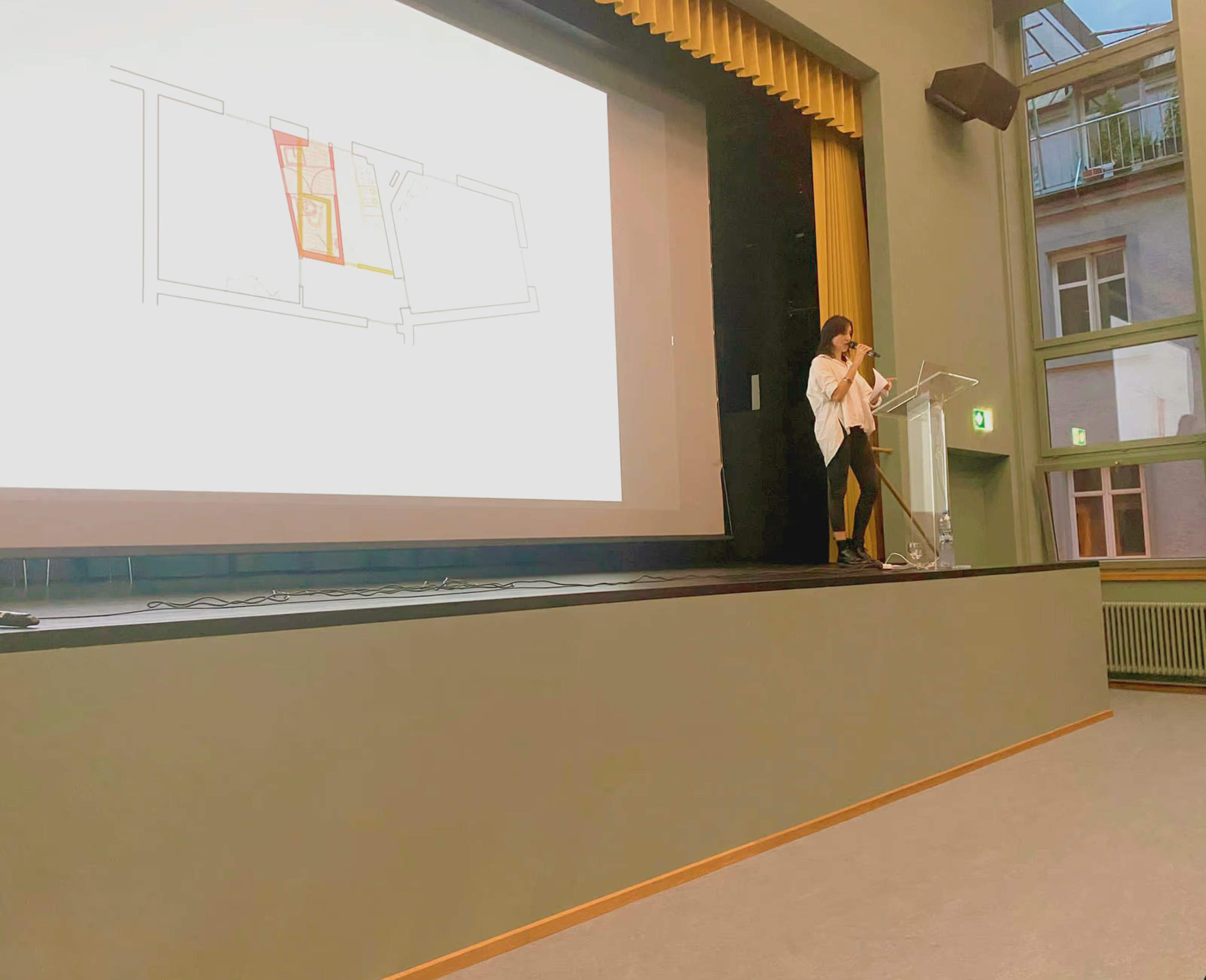
Each year, the series Vorgestellt. Basler Architektinnen und Architekten is hosted in Basel by the S AM – Swiss Architecture Museum in collaboration with the Basel section of the Swiss Society of Architects (BSA). Since 2014, the program has invited local practices to present not only projects but also their broader architectural position. The aim is to spark reflection on the discipline itself rather than simply showcase completed works.
The 2023 edition took place at the recently renovated Theatersaal Berufsfachschule, organized by Shadi Rahbaran (BSA Basel) and moderated by Andreas Ruby (Director of S AM). Our office, Gwendoline Eveillard Architecture, was invited alongside Studio Balthasar Wirz and Wallimann Reichen Architekten.
Rethinking Sufficiency in Housing
For our presentation, we explored the theme of sufficiency in small housing spaces. The discussion was framed by a comparison between Switzerland and France:
- In Basel, the average apartment size in 2022 was 52.7 m², with a rising demand for larger units (data from 2023).
- In Paris, the opposite trend is visible: apartments have been shrinking for decades, averaging 48.4 m² in 2022 compared to 64.7 m² in 1970. Nearly half of the housing stock now consists of very small units (data from 2023).
This means that in dense metropolises such as Paris, people must often live in smaller spaces, which typically provide less comfort and functionality. In less constrained areas, surface areas are considerably increased to achieve an acceptable level of functionality.
These contrasting contexts raise the same questions:
- How can architecture respond when space is too limited to meet contemporary needs?
- How can a small space offer the same functionality as a space twice its size?
Three Strategies for Doing More with Less
We presented three refurbishment projects that approached sufficiency through compact, flexible, and reversible design:
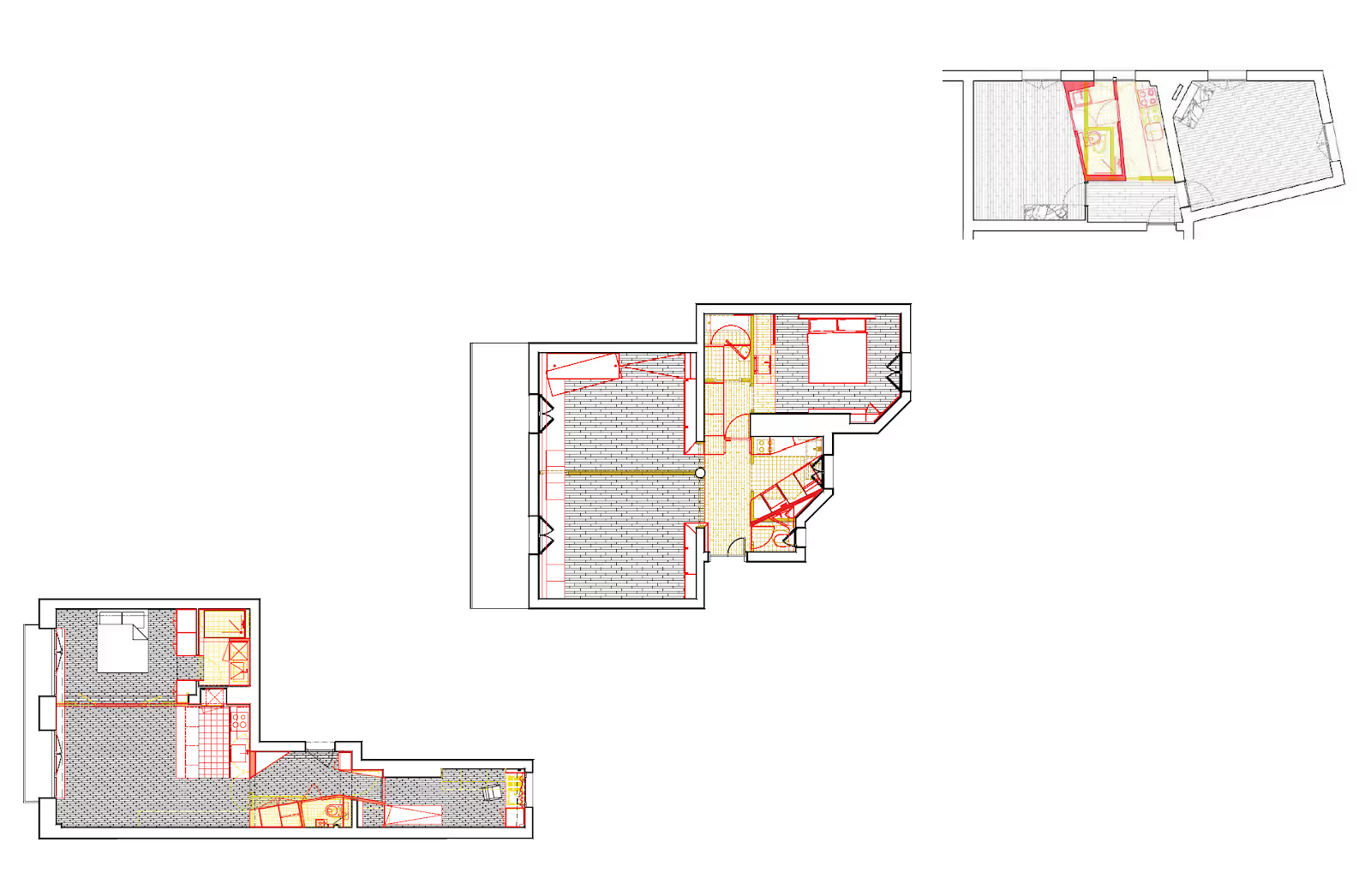
1. The Cavity Bathroom (Paris, 36 m²)
A missing bathroom was inserted as a “cavity” within a load-bearing wall. By treating it as both room and circulation, with reversible partitions, the apartment can shift layouts—functioning either as a one-bedroom flat or two small studios.
The trick has been to not only treat this new function as a room, but also as a circulation, and most of all, as a reversible space.
It is a reference to Paul Virilio and Claude Parent “Circulation Habitable”. They meant by it to replace stairs by ramps or inclined surfaces which you can use both for circulation but also other uses
It’s a way of using a space as the cradle of multiple resources: in this example, it’s about a multifunction of rooms, thought as devices, and compactness, and also rather low-tech gestures.
In this apartment, there is a playful way to address antagonisms, on servant spaces and served spaces, on mass and void, fixed and mobile furniture, on the relation between circulation and functions. The reversibility of the bathroom into a corridor here allows alternative layouts of the apartments, in which the living-room can become a distinct bedroom for guest, with their own access to the facilities. It allows the division of the apartment into two small studios with shared kitchen-bathroom
2. The Ribbon Cabinet (Paris, 60 m²)
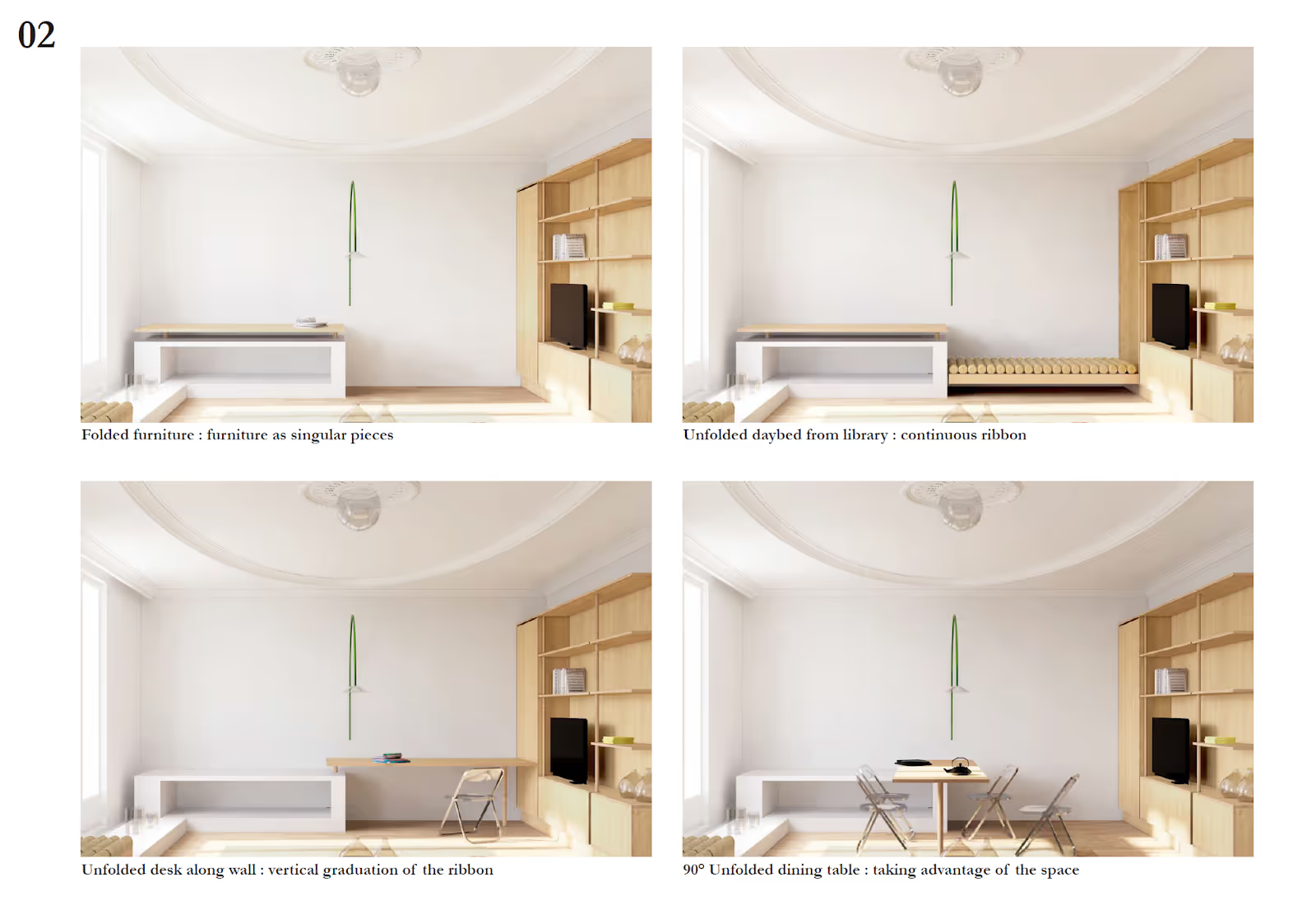
Here, walls were replaced by a long piece of multifunctional furniture acting as a flexible spine. Like a Swiss Army knife, it accommodates shifting uses over time, challenging the fixed relationship between rooms and functions.
It comes from this observation : not every use needs its own space. A space can accommodate different uses at different times by spatial transformation. This proposal is also inspired by Gilles Deleuze idea of “the Fold”. One can think space through its dynamism and interconnectedness : space can be seen less like a static and enclosed form, and more like an open, dynamic, fluid one. Space can be reshaped to evolve over time, depending on the needs
3. The Central Block (Paris, 56 m²)
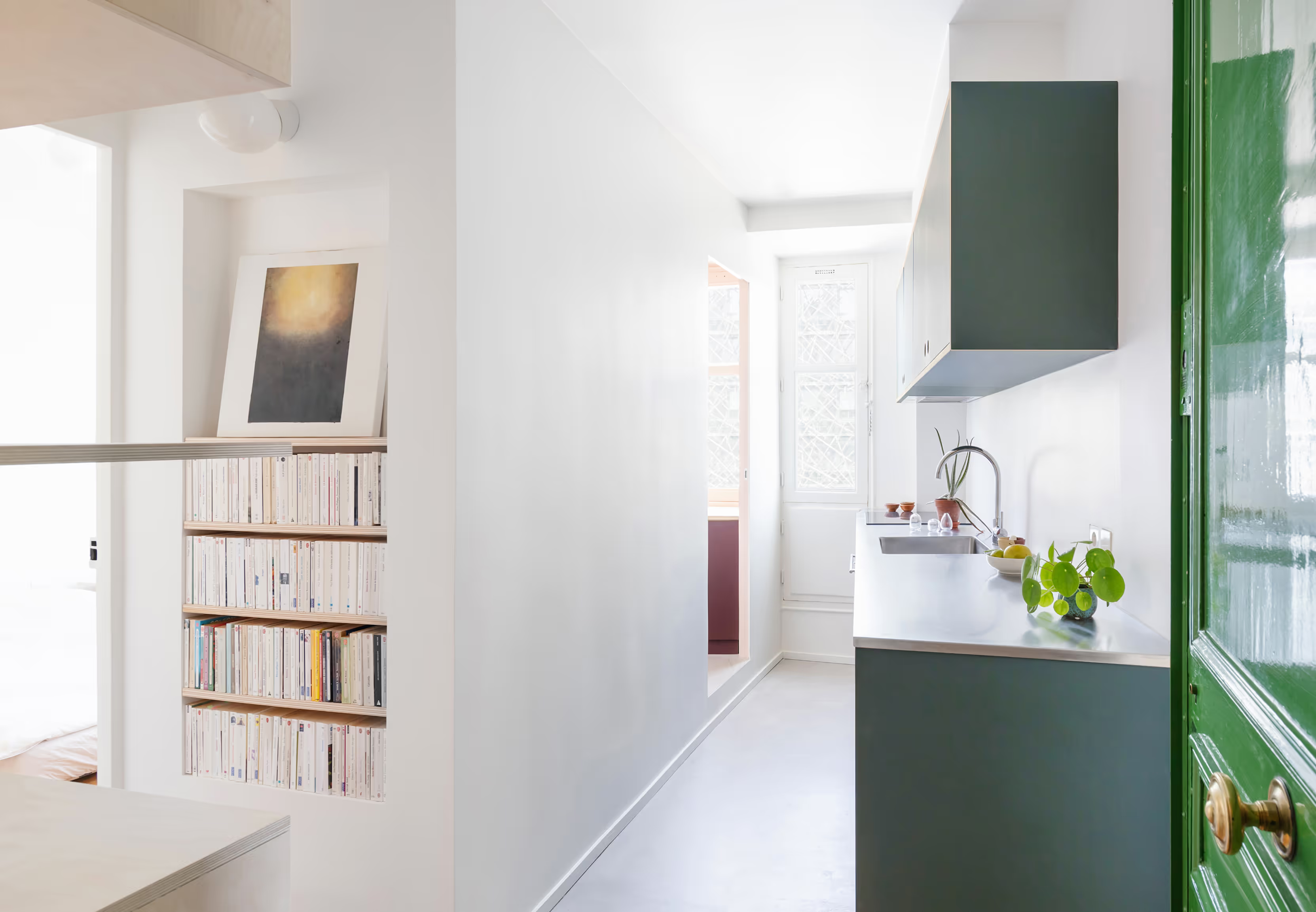
A customized cabinet wrapped around the toilet core transformed wasted circulation into usable space. Serving simultaneously as bookcase, wardrobe, and niche-bed, it choreographs daily life while compacting functions.
Sufficiency as Sustainability
Sufficiency is not about scarcity but about making existing spaces more resourceful. It invites us to reconsider domestic programs, embrace multifunctionality and flexibility, and imagine an architecture of movement—dynamic and adaptable rather than static.
The Vorgestellt platform provided an invaluable opportunity to share this perspective and to debate how architects can respond creatively to the challenges of limited space—building a culture of sufficiency as a foundation for sustainable living.
This is an apartment in 13arrondissement of Paris, right at the border between the new Avenue de France district, a business district with residential towers, and the old working-class district of Tolbiac. This is an apartment of 36m2, organized with a 2-rooms layout, a load-bearing wall in the middle and no bathroom– just toilets.
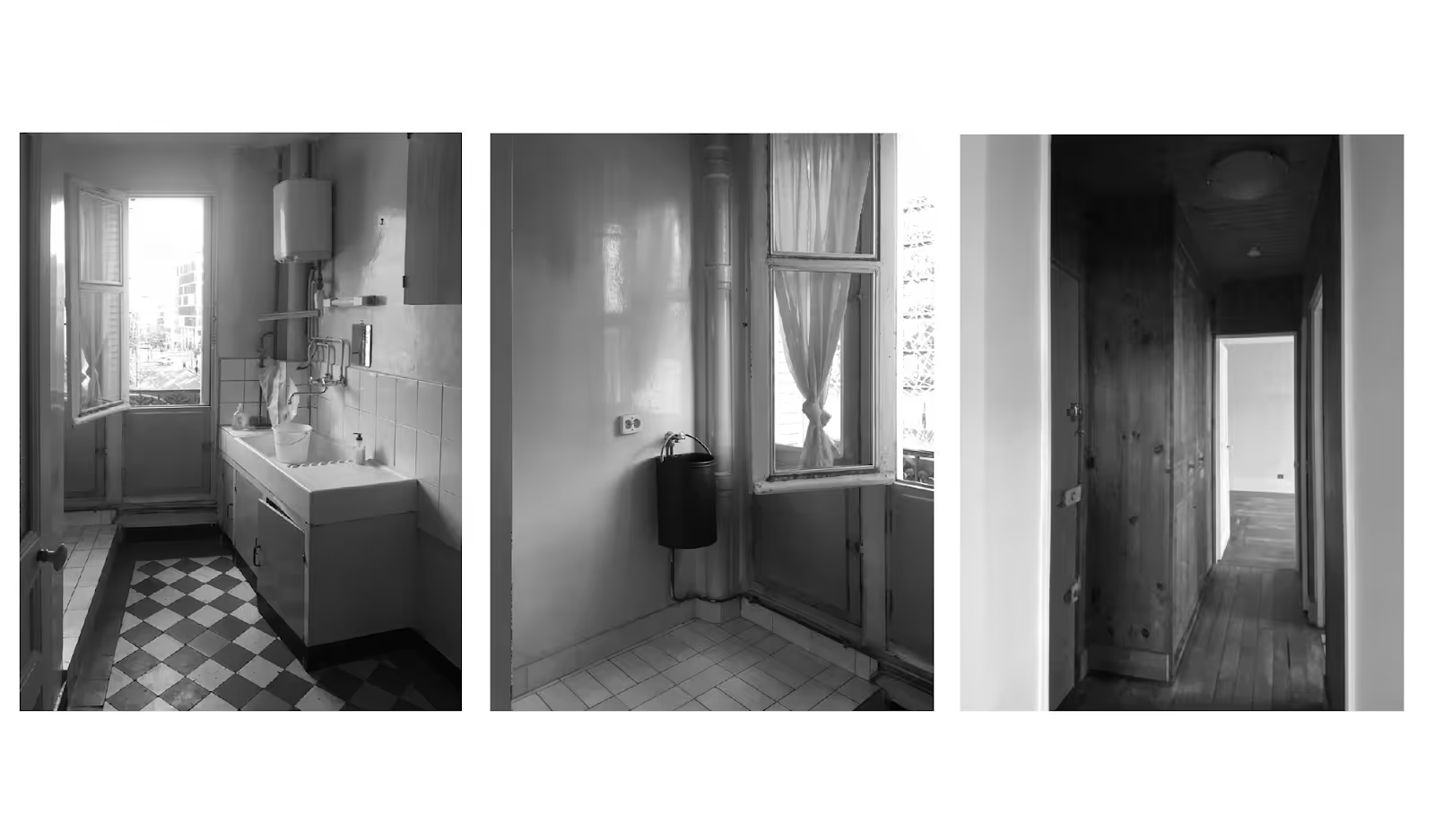
Creating a missing but yet essential functional room required to take some space from the small bedroom or the kitchen. Ideally one wouldn’t even create another room as the surfaces were already so small. The bathroom has been added in the least invasive way possible: as a cavity between two walls … as a cavity within one big thick wall. This cavity would contain every required sanitary equipment: shower +toilets + basin sink + storage and even washing machine.
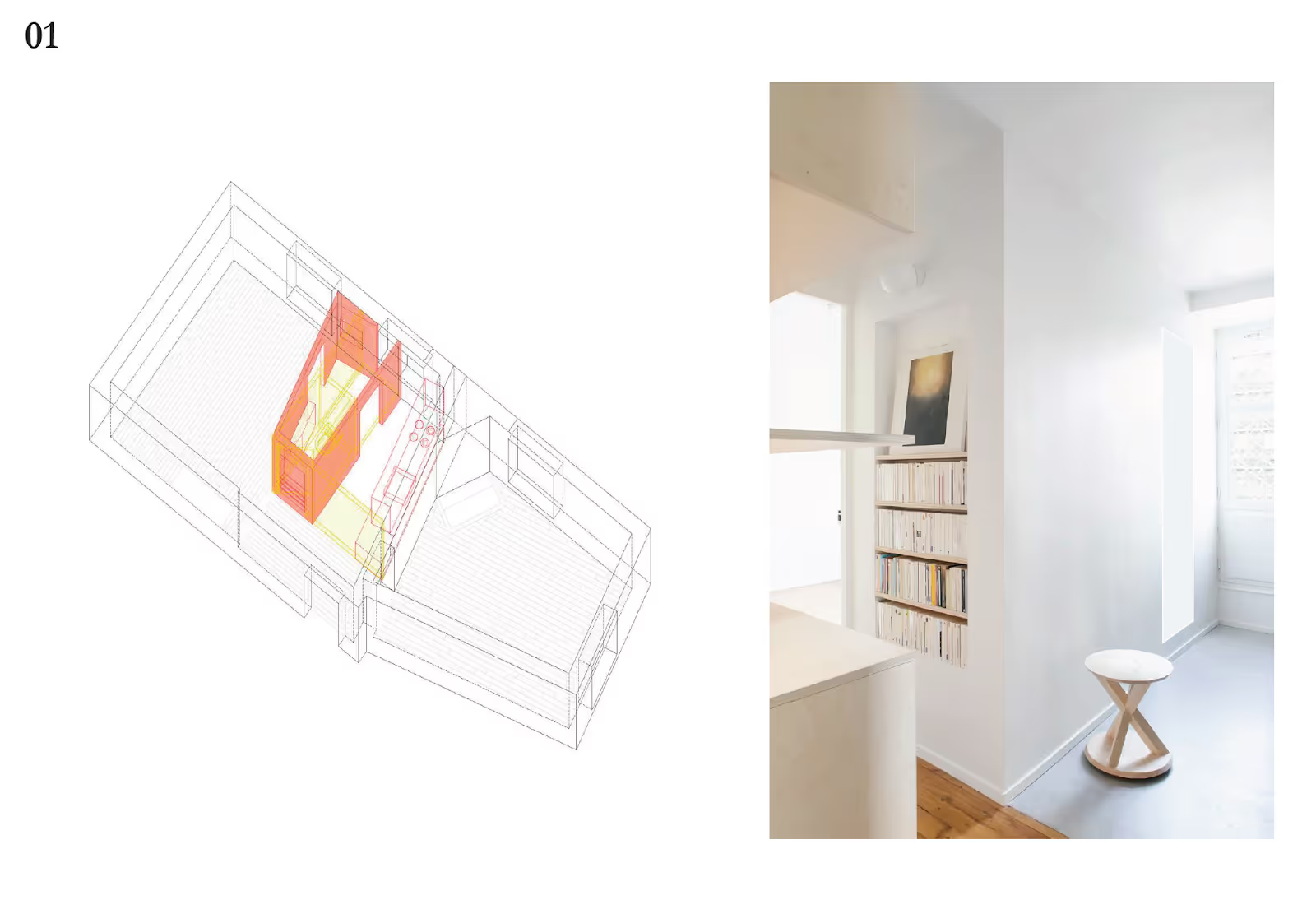
The trick has been to not only treat this new function as a room, but also as a circulation, and most of all, as a reversible space.
It is a reference to Paul Virilio and Claude Parent “Circulation Habitable”. They meant by it to replace stairs by ramps or inclined surfaces which you can use both for circulation but also other uses
Here, Two doors are place in front of each other, and at a very precise distance one from each other in order to create a continuous partition wall that conceals part of the bathroom. In this case, opened doors conceal the most intimate area of a bathroom: the toilet and shower. This intimate area of the bathroom is thus treated such as a closet.
Sufficiency means doing more with less.
It’s a way of using a space as the cradle of multiple resources: in this example, it’s about a multifunction of rooms, thought as devices, and compactness, and also rather low-tech gestures.
In this apartment, there is a playful way to address antagonisms, on servant spaces and served spaces, on mass and void, fixed and mobile furniture, on the relation between circulation and functions. The reversibility of the bathroom into a corridor here allows alternative layouts of the apartments, in which the living-room can become a distinct bedroom for guest, with their own access to the facilities. It allows the division of the apartment into two small studios with shared kitchen-bathroom
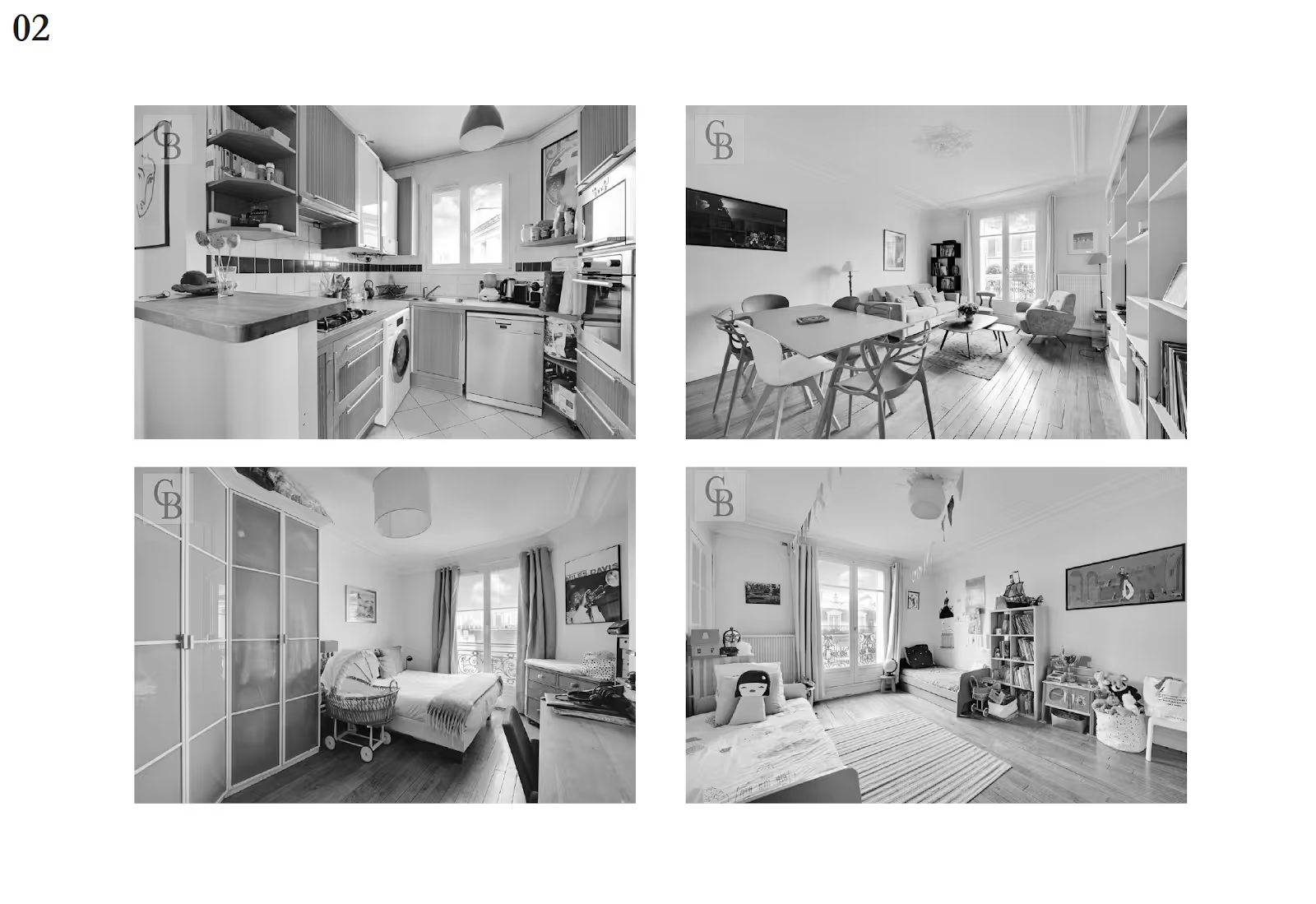
Here is a different approach on Suficiency - redefining the programing through the customized piece of furniture - with a furniture/mobile ribbon applied to a refurbishment project. In this 60m2 appartement, the client wanted to remove as many walls as possible to create larger rooms.
The main intervention is a long-changing cabinet, piece of furniture, which contains a multitude of changing functions.
The ribbon-furniture challenges the relation between room and function as well. The rooms are undefined, but the furniture – moving wall contain the uses. This unfolding ribbon is like a Swiss Army knife.
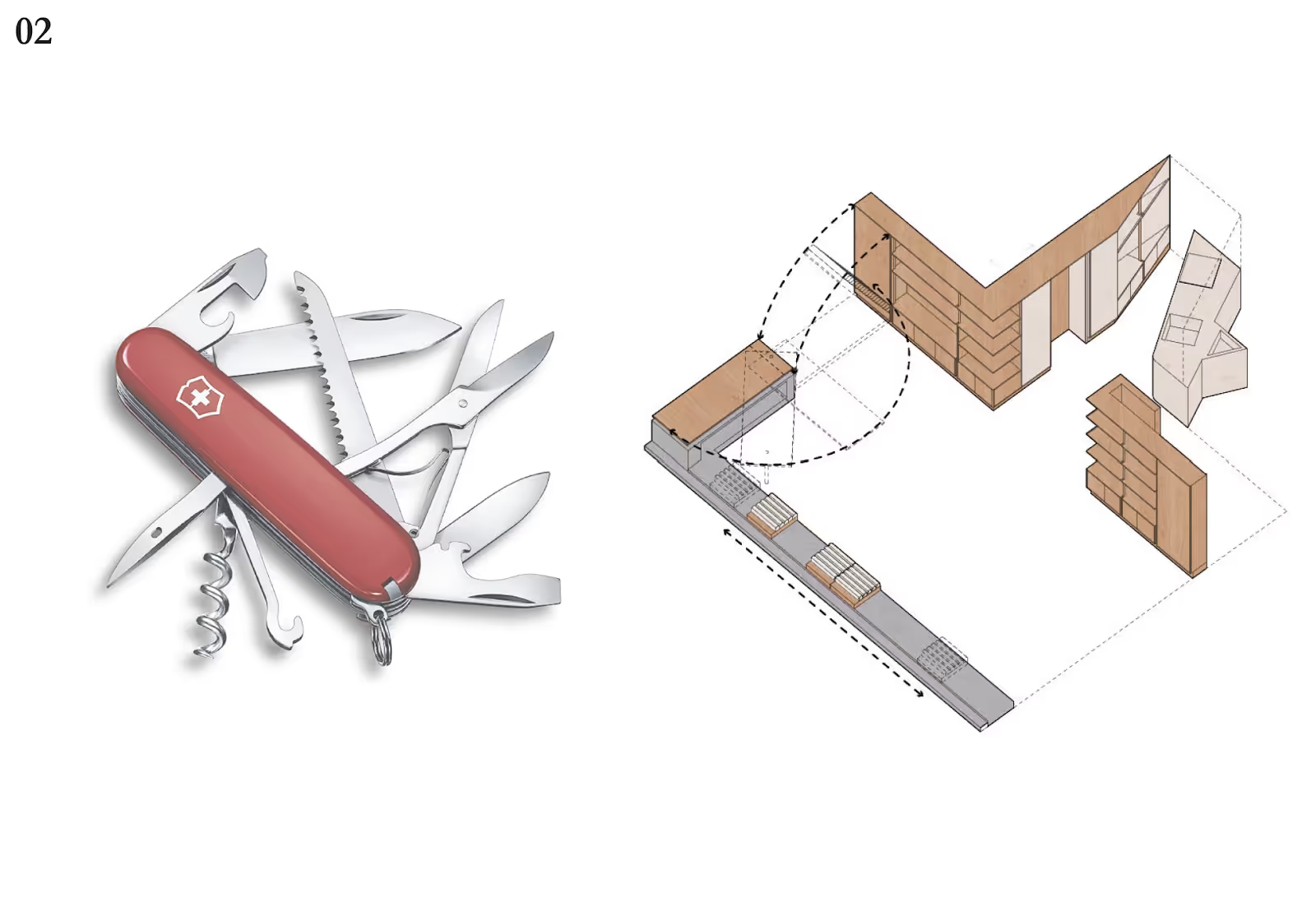
Sufficiency here come with this idea: uses do not need to be provided at the same time in an apartment, but can happen alternatively, only when needed. Not every use needs its own space. A space can accomodate different uses at different times by spatial transformation.
This proposal is also inspired by Gilles Deleuze idea of “the Fold”. One can think space through its dynamism and interconnectedness : space can be seen less like a static and enclosed form, and more like an open, dynamic, fluid one. Space can be reshaped to evolve over time, depending on the needs
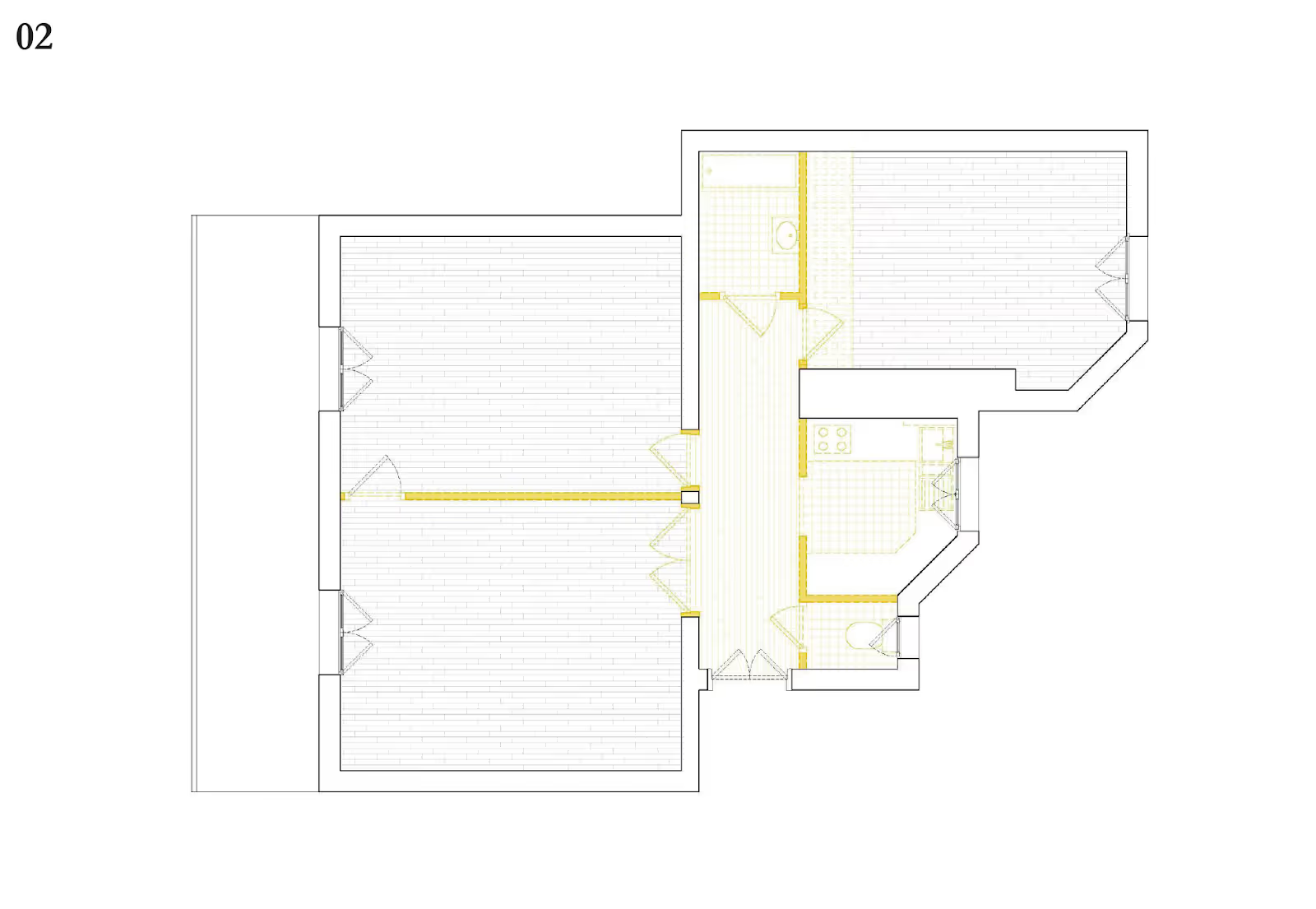
In this weirdly-shaped apartment, there is a huge waste of space: out of 56m2, 19m2 were mere circulation.
Here again, the in-built customized cabinet central block played a central role to make better use of the available space. A customized closet is wrapped around the toilets, and sculpted in order to create a hierarchy of space. While choreographing the circulation, this element shelters and contains several uses adapted to the three rooms it touches: the entrance, the living room and the office. On one side is a bookcase, in the centre a dressing room, the toilets, and on the other side, a niche. The latter can be transformed at will into a bedroom unit.
Sufficiency a milestone to pursue on each project, to address, as an Architect the concept of sustainability. Sufficiency aligns with sustainability by encouraging an economy of means, and a flexible attitude towards uses and programmation. It requires an attention to materials, on precise knowledge of construction and a deep connexion to craftsman knowledges and resources. It is to say that this also relies also on understanding, and connecting, as much as possible a wide interprofessional network
Partager